

LAURIE, Mo. — A forum for local emergency personnel highlighted new trends in synthetic drug use, pointing to some of the extreme and bizarre side-effects, as well as training them how to treat individuals who have used those drugs.
The Lake West Ambulance District held the synthetic street drug awareness forum on Wednesday, March 19 at the district’s Laurie base. Lake West Ambulance District, Sunrise Beach and Lake Ozark Fire Protection District personnel attended the class.
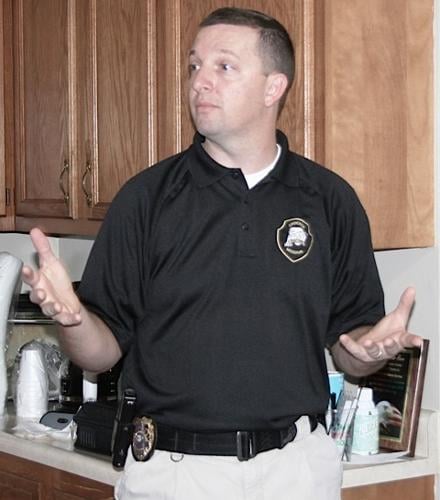
“The Lake of the Ozarks is a hub for different people from all over the states. Because it is a vacation area, they bring their drugs from everywhere to use, and it starts distribution here,” said class presenter, Crocker Police Chief Chris Twitchel. Twitchel says the use of synthetic drugs is on the rise in every city around the Lake, and this forum is one of many that has been held to educate and create awareness about synthetic drug use.
There has also been a resurgence of heroine abuse at the Lake, he noted. “It usually comes in spurts: it’s cheap, people die, they get arrested and then it dies down for a time. There is a cycle and the cycle is on the rise again,” he warned. National news headlines were recently dominated by the actor Philip Seymour Hoffman’s death due to an overdose of heroin mixed with other drugs.
According to a Boston Globe article, heroin use doubled in the United States between 2003 and 2011, and fatal overdoses of the drug increased by 46 percent during that time.
The challenge with synthetic drugs, however, is partly due to the rapid pace at which they can be synthesized, and then altered to stay ahead of the law.
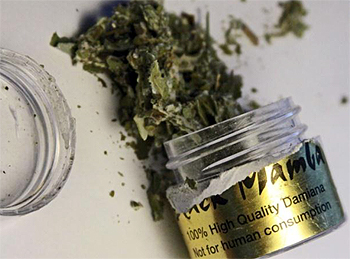
One trend involves the creation of synthetic drugs that are technically legal, but that mimic the effects of illegal drugs. K2, or “Fake” as it is sometimes nicknamed, is—in some places—a legal alternative to marijuana. K2 is not banned in some cities; in others, it is banned by ordinance. But bans seem to stay one step behind, as the manufacturers can sometimes make a new drug by changing just one ingredient. Then it can take law enforcement another six months to get that new drug listed as illegal. Twitchel says law enforcement agencies are severely under-funded and understaffed in this war against drugs.
Twitchel pointed to a range of effects synthetic drugs can have on the user: suicidal tendencies, violence, hallucinations, convulsions, anxiety attacks, dangerously elevated heart rates, increased blood pressure, vomiting and disorientation.
“One highly publicized incident was of an extreme side effect, possibly from K2, that happened on the Miami causeway where a man turned zombie and started eating another person,” Twitchel said. “The excited delirium that occurs due to using these drugs causes… super human strength. They become an uncontrollable danger to themselves, their families and for emergency personnel. We are hearing a lot of stories of people running down the street naked because the drugs greatly increase body heat, and they have no perception of time and place. It is just one big trip. People are dying from tachycardia, as their heart beats out of their chest.”
The new synthetic drug epidemic is especially prevalent among teens and those in their early twenties. According to Twitchel, producers of synthetic drugs are targeting young people by packaging them in funny animated characters. This packaging is then marked, “Not for human consumption,” he explains, and that is how they get around comprehensive drug control acts.
Twitchel indicated U.S. Poison Control figures show the dramatic rise of synthetic drug use over the past five years. In 2009 there were 112 synthetic drug overdose calls to the Poison Control Center, from 15 states. That number rose to more than 3,200, from all 50 states, in 2010. In 2011 there were around 13,000 calls; 60 percent were from persons under the age of 25.
The case in which teenager David Mitchel Rozga died after using bath salts led to the fight for, and enactment, of the Synthetic Simulant Act of 2011—or the David Mitchel Rozga Act—to combat synthetic drugs. “People are making big money off of other people’s woes,” Twitchel said. “This is all financially driven and we don’t even know what the long term effects are going to be.”
Some of the symptoms of synthetic drug use include a withdrawal from family and friends, lower grades, depression, anxiety, mood changes, anger and sleeplessness. “We really don’t know what the effects are every time,” Twitchel explained. “They keep coming out with something new and it just gets worse. In one concoction they mix a stimulant in with a Central Nervous System Depressant (CNSD) and they go on a big roller coaster ride up and down. Some mix two CNSD and the effects are like pushing your body down and then putting a big brick on top.”
One of the bizarre components of synthetic drug use is that, in some cases, there is a delayed reaction time: violent hallucinations can take effect much later than the initial high. This can cause some drug users to ingest more, triggering an overdose.
“This is not a fad,” Twitchel insisted. “It is not going away, and education is the key.”


