


LACLEDE COUNTY, Mo. – A sinkhole – long used as a community dump – has been dye-traced to Ha Ha Tonka Spring in Lake of the Ozarks. Now, the Goodwin Pit is being cleaned up... slowly, but surely.
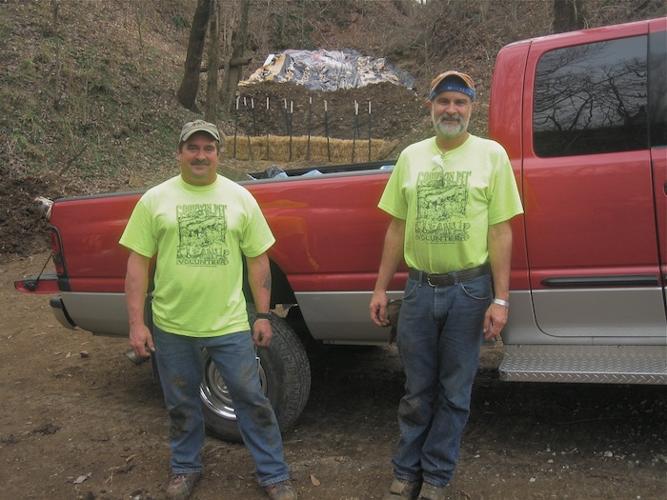
While the last vestiges of bearable outdoor temperatures linger, volunteers from across the mid-Missouri area are donning gloves, grabbing shovels, and helping to dig up what took the better part of a century to accumulate. Klaus Leidenfrost, of the Missouri Caves and Karst Conservancy (MCKC), is directing the cleanup efforts, and he said while crews have made immense progress, there is still work to be done.
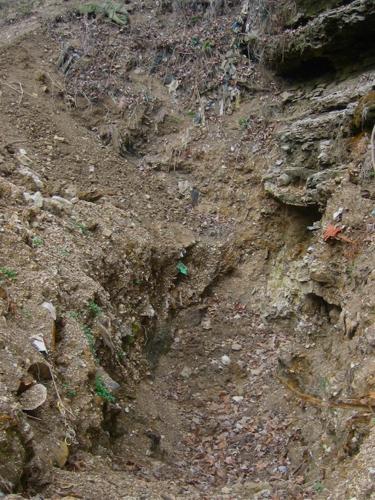
When heavy rains come, water fills the sinkhole, which is around 40 feet deep. As the water drains through the watershed, it inevitably brings with it residues from the pit. That's the bad news.
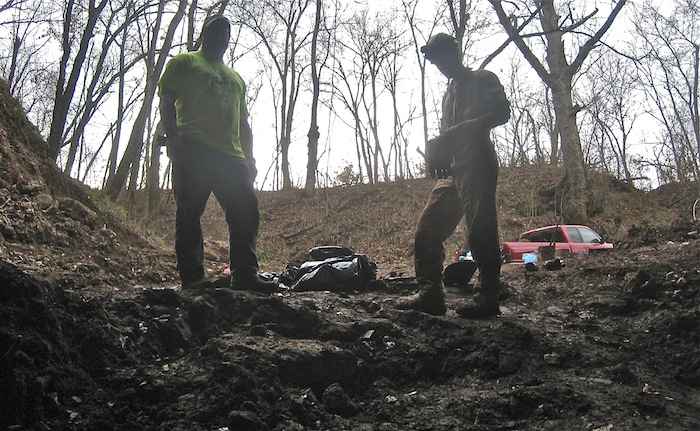
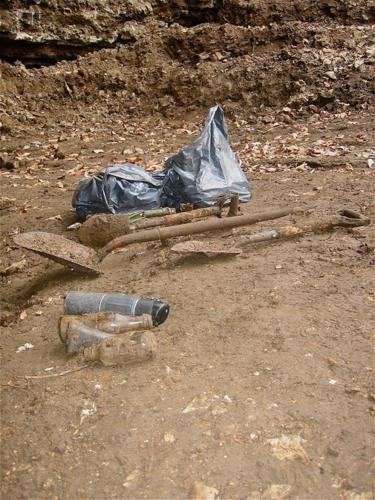
The good news is cleanup crews have made a major difference. Thus far, volunteers have pulled more than 20 tons of trash out of the Goodwin Pit – mostly without any equipment other than pickup trucks and shovels. Among the refuse: around 1,000 tires, and at least one ton of scrap-able metal.
MCKC has teamed up with Lake Ozark Grotto (LOG) on the project, and the two organizations have made major headway, utilizing grants large and small provided by various groups. MCKC has donated $5,000 to the effort; LOG has donated $1,000; Missouri Department of Conservation (MDC) has donated $2,000; The LAD Foundation has donated $2,000; and Missouri Department of Natural Resources (DNR) has given $10,000. The DNR funds were funneled to the project through the Meramec Regional Planning Commission, to whom, along with MCKC, the department has entrusted the cleanup efforts.
When asked how much money would get the job done, Leidenfrost paused. “A hundred-thousand dollars,” he said. Renee Bungart, with DNR, said the department's contribution came out of funds from Section 319 of the Clean Water Act. She said if MCKC wants to apply again next year for additional cleanup funds, they certainly could do so.
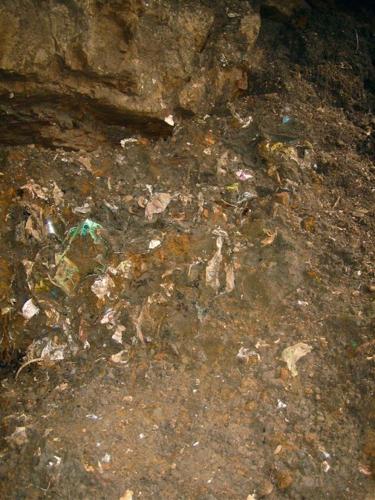
The location of the Goodwin Pit is particularly remote: around 10 miles north of Lebanon, down a gravel road off State Highway BB. But Leidenfrost suspects residents and businesses from nearby municipalities utilized the sinkhole. He noted a series of old photographs. The first shows an array of garbage. The second, taken sometime later, shows the pit covered in tires. Leidenfrost suggested an auto business was probably responsible for that.
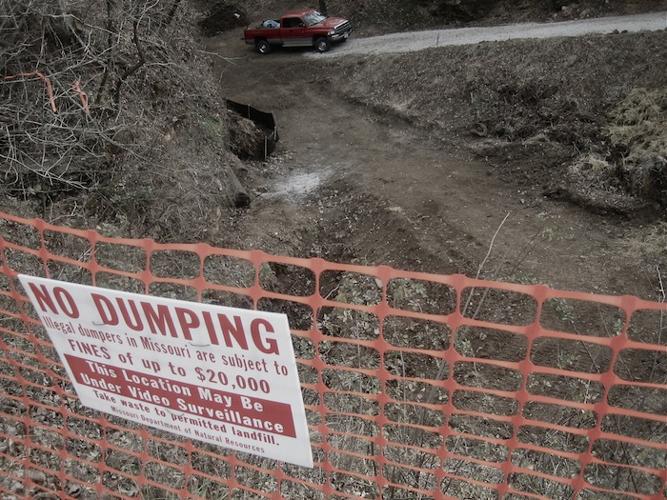
Illegal dumping manifests itself as a sort of addiction. Leidenfrost pointed out that even since the cleanup began, crews have arrived in the morning to find 55-gallon drums full of trash tossed into the pit. After that happened, he said, they put up a fence and a sign. Then the dumping stopped.
Leidenfrost recalled another dump cleanup project in Duke, Mo. As cleanup efforts progressed, three individuals were caught trying to dump in the pit. One was a schoolteacher. Another was a minister. And the third was an individual who lived nearly 30 miles away, and who had trash service at his residence. In spite of these examples, Leidenfrost said one of the best ways to make people stop dumping illegally is to clean out the trash from that spot. “If you leave it alone,” he said, “people keep dumping.”
Leidenfrost and Bungart agreed that the long-term solution to the problem of illegal dumping is education. Awareness is the key, Leidenfrost pointed out. “It comes back to knowledge of groundwater and conservation issues,” he said, noting groups from the Camdenton School District have volunteered in cleanup efforts, teaching children about the repercussions of harmful dumping practices.
On Saturday, Dec.1, a group of officers-in-training from Ft. Leonard Wood gave precious study time to volunteer at Goodwin Pit. After several hours, one man clambered out of the pit holding a discarded audio amplifier. As one might expect, the garbage in Goodwin Pit ranges from mundane to outright curious. Leidenfrost recalled some of the more interesting finds: 10-oz Coke bottles, a bowling ball, a green toilet.
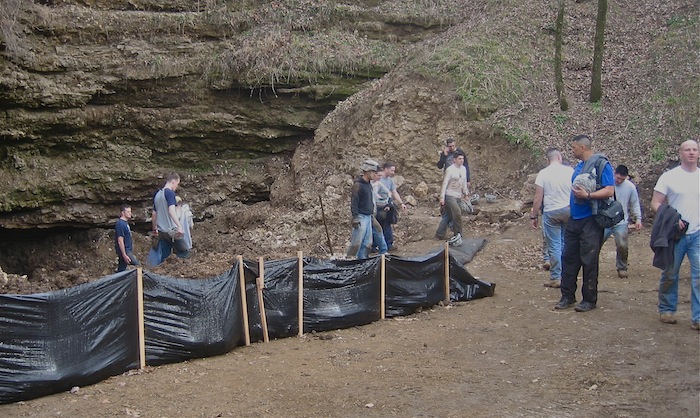
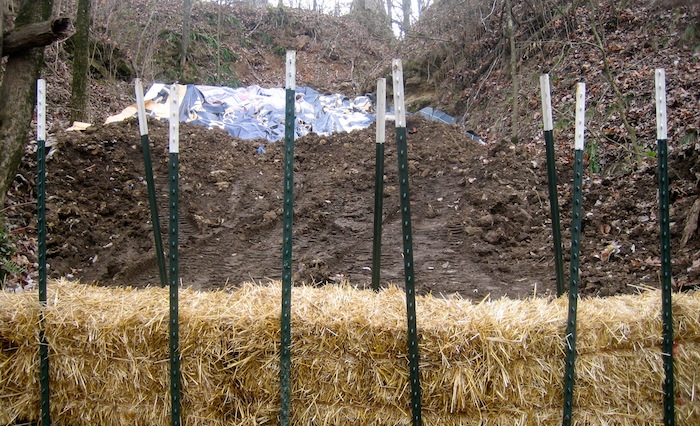
But beyond the novelty, volunteers have done serious work to clean up the sinkhole. Most recently they have begun erecting silt fences and sequestering trash-filled soil away from the work area, in hopes that the next rains won't wash sediment and garbage back into the pit and undo all their work. They would rather get rid of the soil altogether, but, Leidenfrost said, there's nowhere to put it. There are not sufficient funds for dump trucks to haul away all the contaminated soil, so the fences are an attempt to let natural processes filter out the trash.
The good news, said Donna Swall of Lake of the Ozarks Watershed Alliance (LOWA), is the pit is being cleaned up, and a fence is being erected to prevent future dumping. Momentum is growing, and the activities of groups such as LOWA and MCKC have contributed to the ever-improving quality of the water at the Lake of the Ozarks.
“Lake of the Ozarks water quality actually improved quite a bit when Truman Dam went in,” Caroline Toole of LOWA said. “Now, I'd say the Lake is healthy and pretty stable... that's one of the projects of LOWA – to increase awareness of where we are now in terms of Lake health and what we need to do to stay healthy.”
Toole made a point of noting that those who enjoy the Lake should not respond to this issue by avoiding the water.
“It's not a situation that is affecting the Lake in terms of tourists,” she said. Instead, individuals can take action by getting involved. “What really helps DNR is citizen support,” Toole said. “Reporting dump sites when they are found, for example. DNR can set up video cameras and monitor remotely and can catch dumpers that way. Once a dumpsite is found, then often it takes a group like MCKC to get involved, find grants to help, etc., and get it cleaned up.”
Increasing education, reporting illegal dumping, and taking a day to don some gloves and help clean up: these are the ways citizens can reverse the trend of illegal dumping and preserve the unique resource that is the Lake of the Ozarks.
For more information on volunteering at the Goodwin Pit cleanup project or donating to the efforts, contact Amy Crews at amuscrews@gmail.com.


